Anomaly
TThe Himalayan cryosphere is a critical freshwater source for communities across Asia, feeding major river systems including the Yangtze, Ganges, Indus, and Mekong. Yet these glaciers are retreating at an unprecedented rate. Scientific projections indicate that even if global warming is limited to 1.5°C, approximately one-third of the glaciers in the Hindu Kush Himalayan region could disappear by 2100. Without substantial emissions reductions, losses could exceed two-thirds.
In 2018, I travelled to Nepal, undertaking a twelve-day expedition to Mount Everest Base Camp. The experience became the foundation for Anomaly, a photographic series initiated in 2020 that examines glacial retreat through the intersection of landscape photography, climate data, and colour.
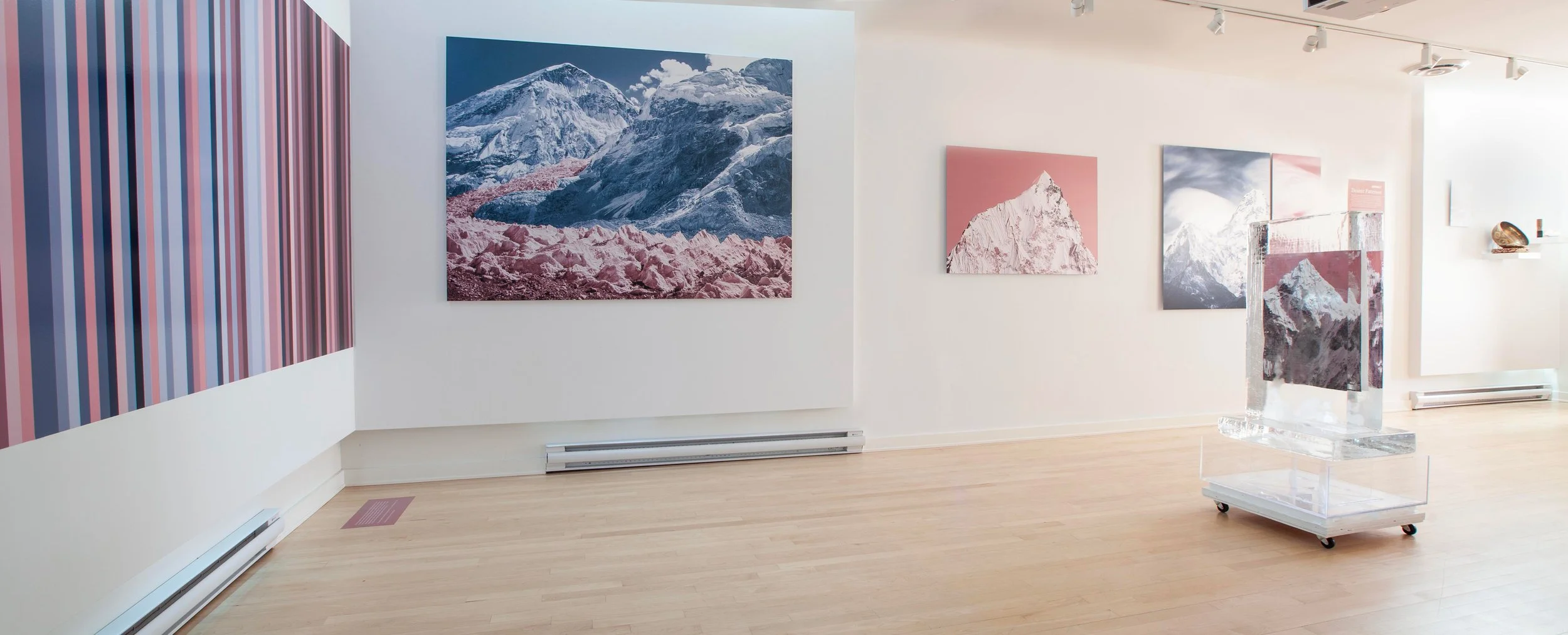
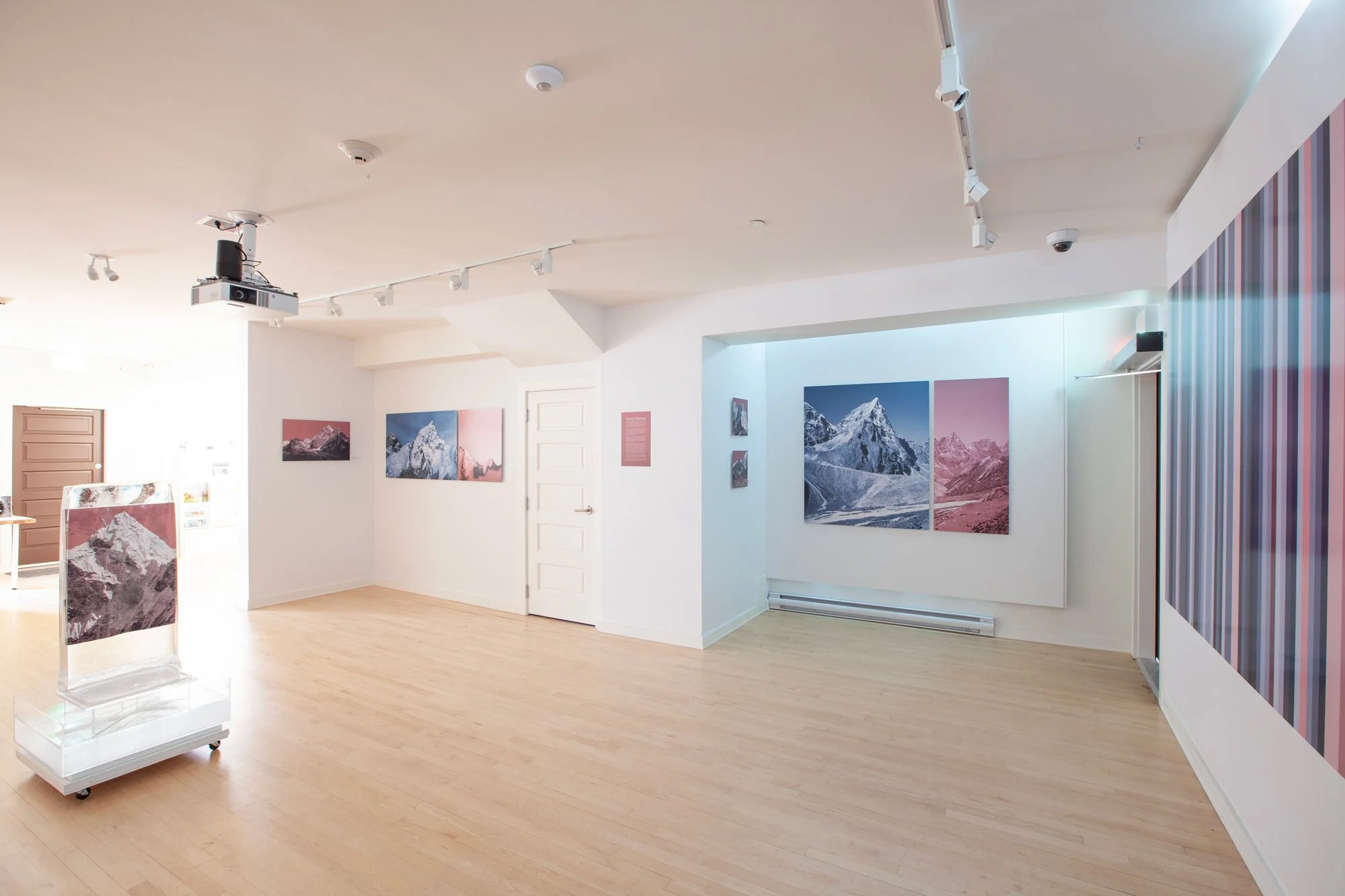
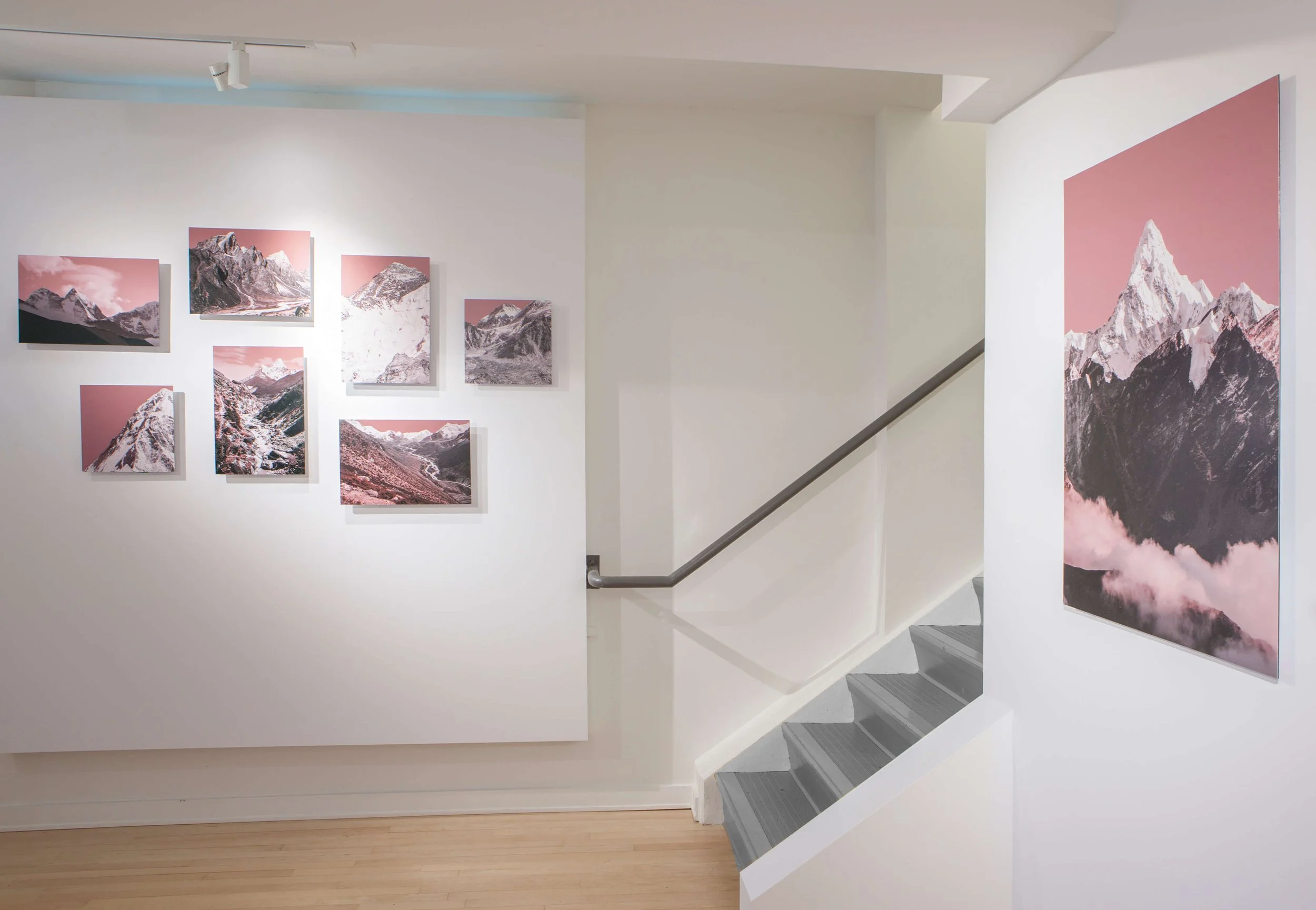
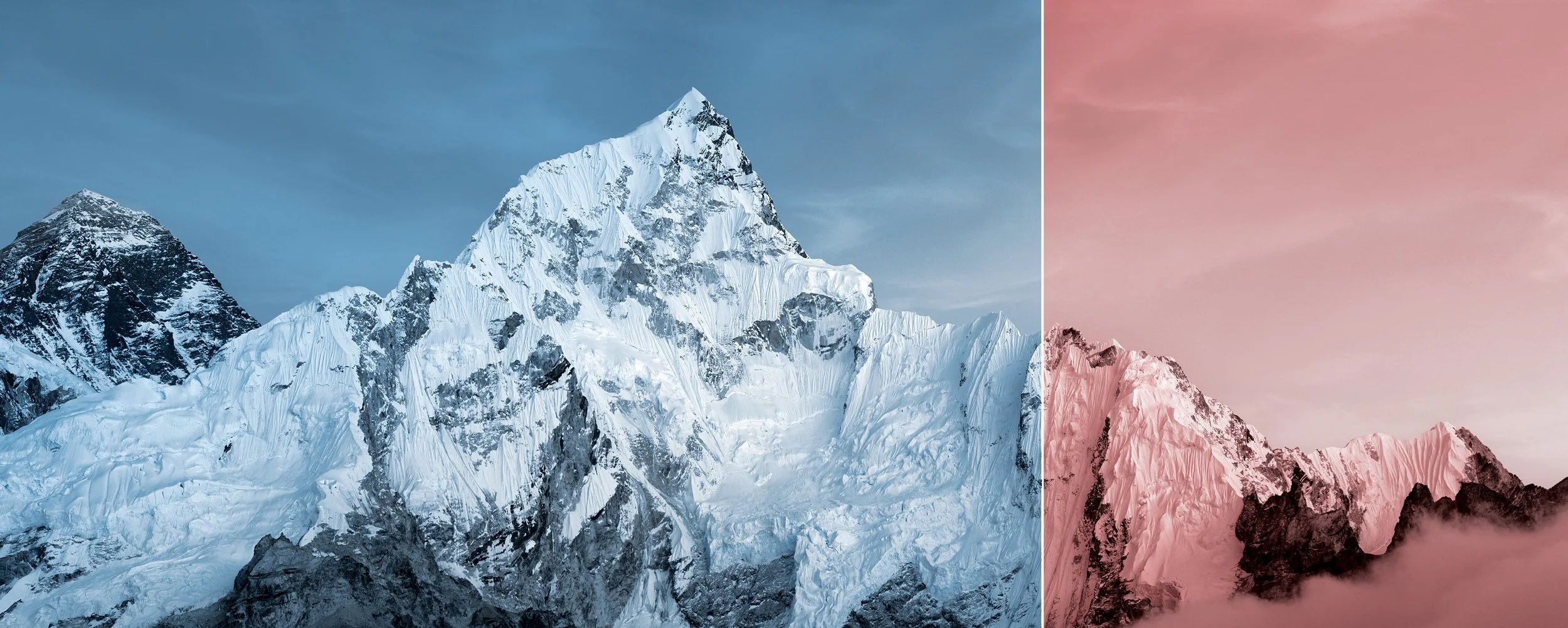
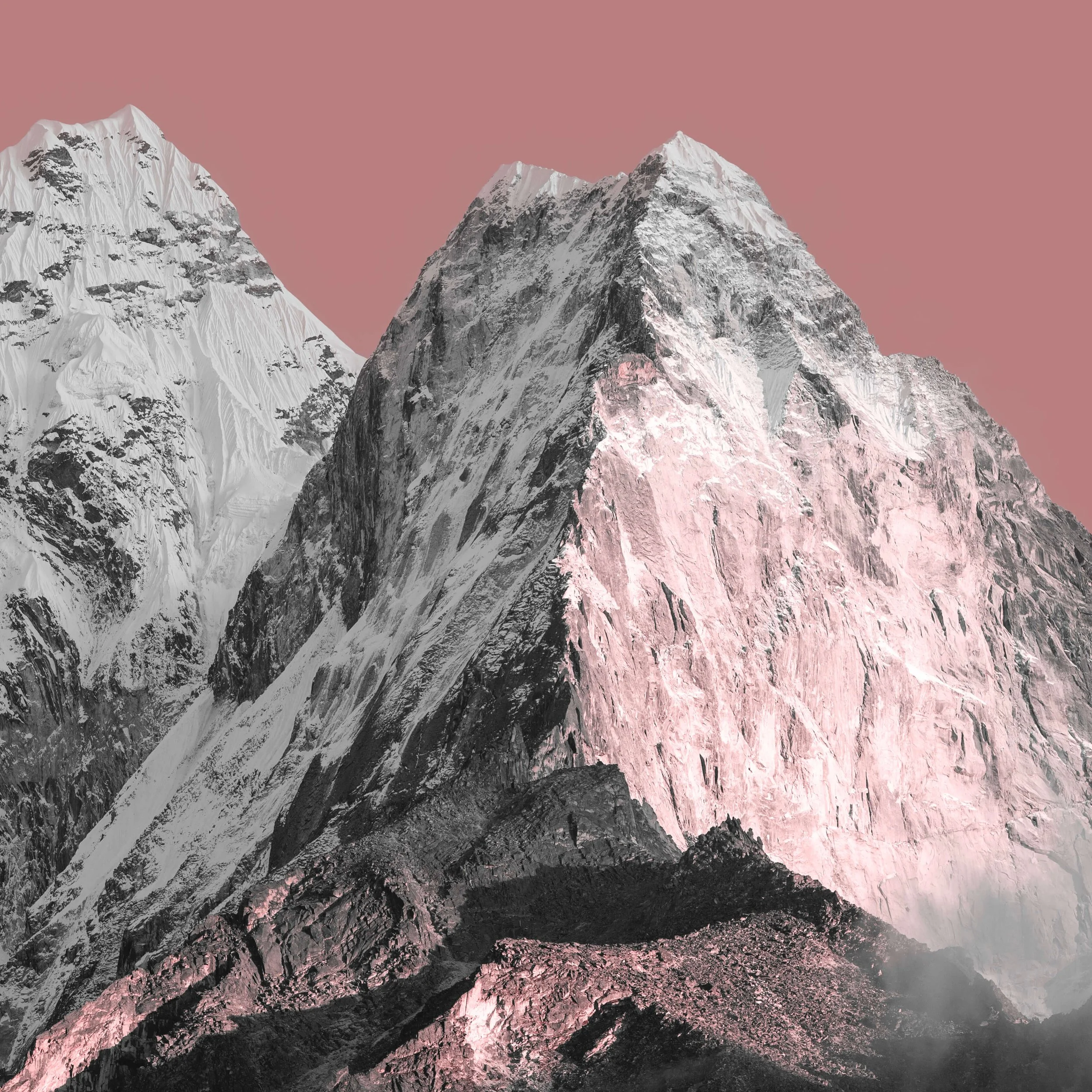
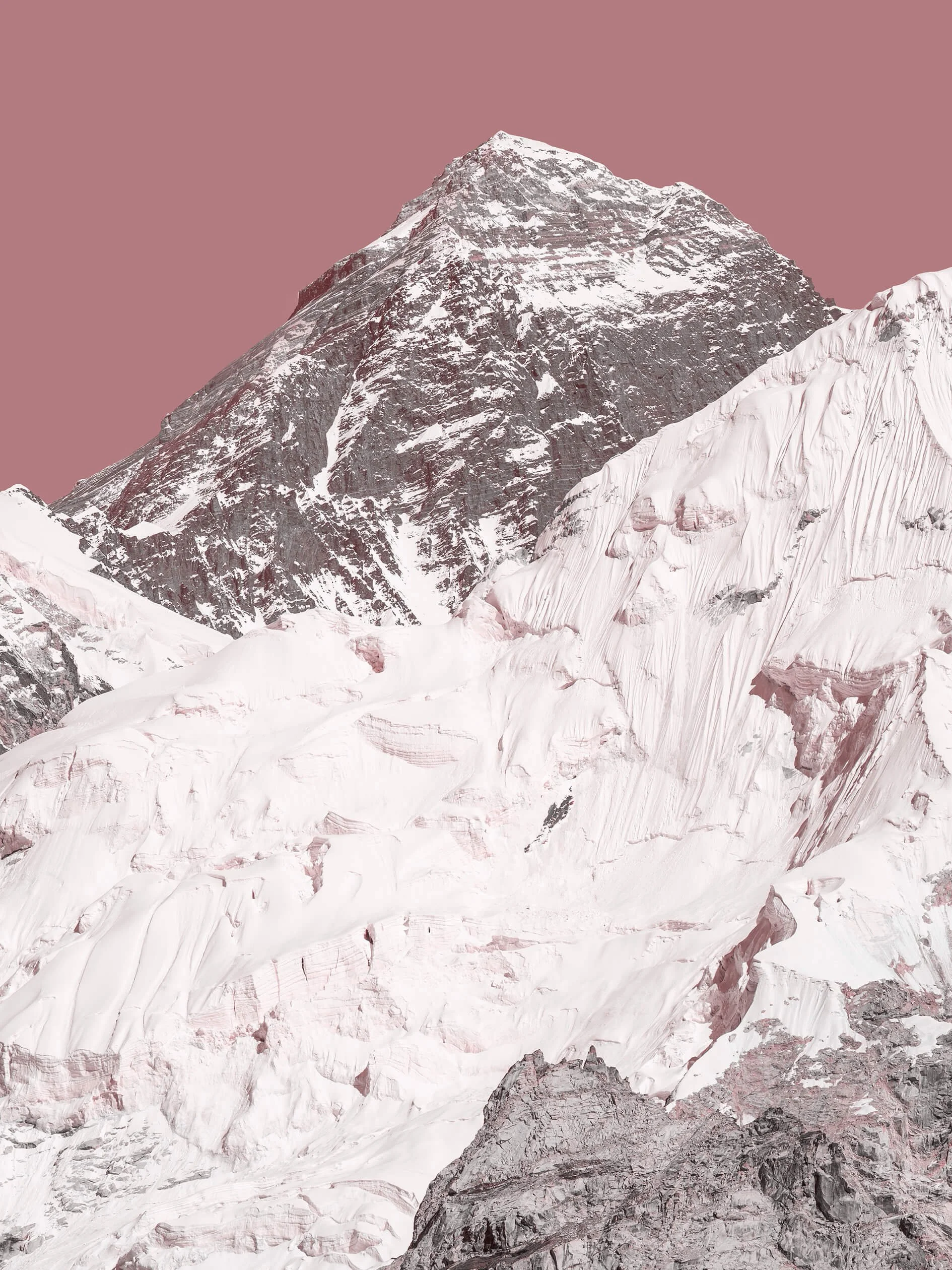
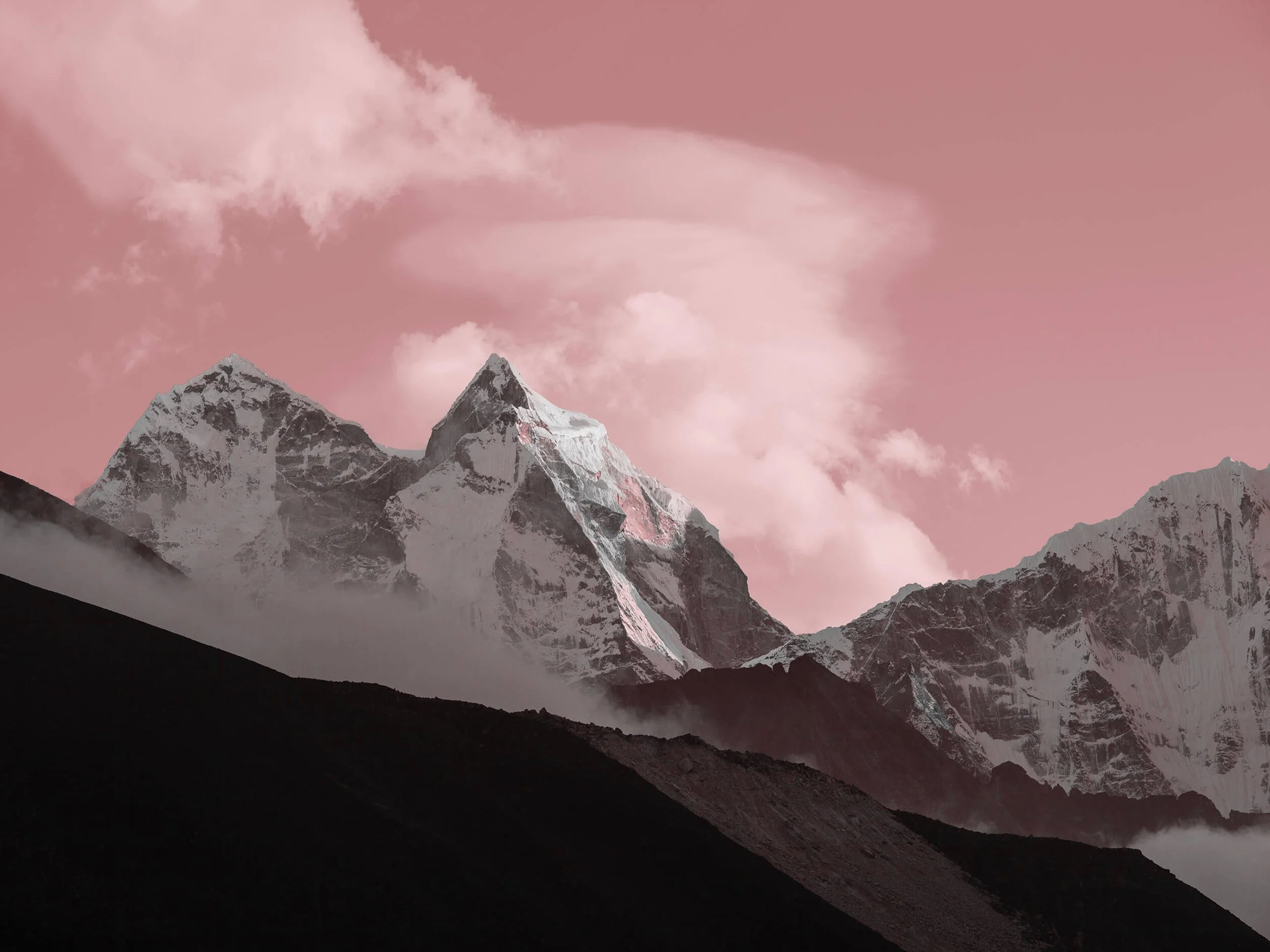
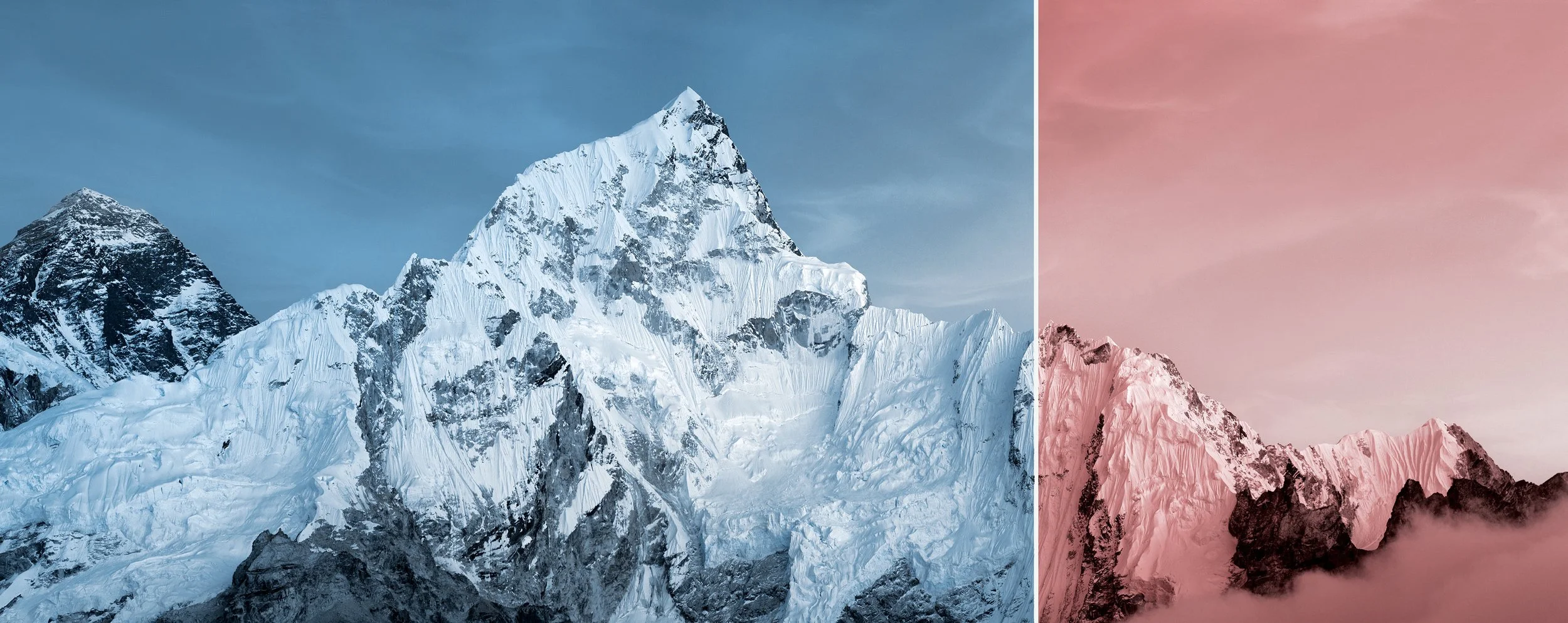
The compositions, frequently divided into asymmetric diptychs, use contrasting fields of pink and blue to visualize projected glacial loss. In several works, one-third of the image is rendered in pink, representing the proportion of glacial ice at risk of disappearing, while the remaining blue suggests what may still be preserved. Other photographs are rendered entirely in pink, extending this visual language across the landscape.
The colour palette draws from climate scientist Ed Hawkins’ warming stripes, which translate historical temperature records into a sequence of coloured bands. I reference a century of temperature data from Nepal, integrating this scientific visualization into the photographic landscape. In exhibition, the corresponding warming stripes are also presented as large-scale murals or light projections, extending the dialogue between photography, scientific evidence, and architectural space.
The title Anomaly refers to a deviation from an established norm. Yet the accelerating changes recorded in Nepal's climate data reveal how exceptional conditions are becoming increasingly familiar. Through the juxtaposition of photographic imagery and scientific information, the series invites viewers to consider the changing Himalayan landscape not simply as a distant environmental concern, but as part of an unfolding global transformation.