Memory of Ice
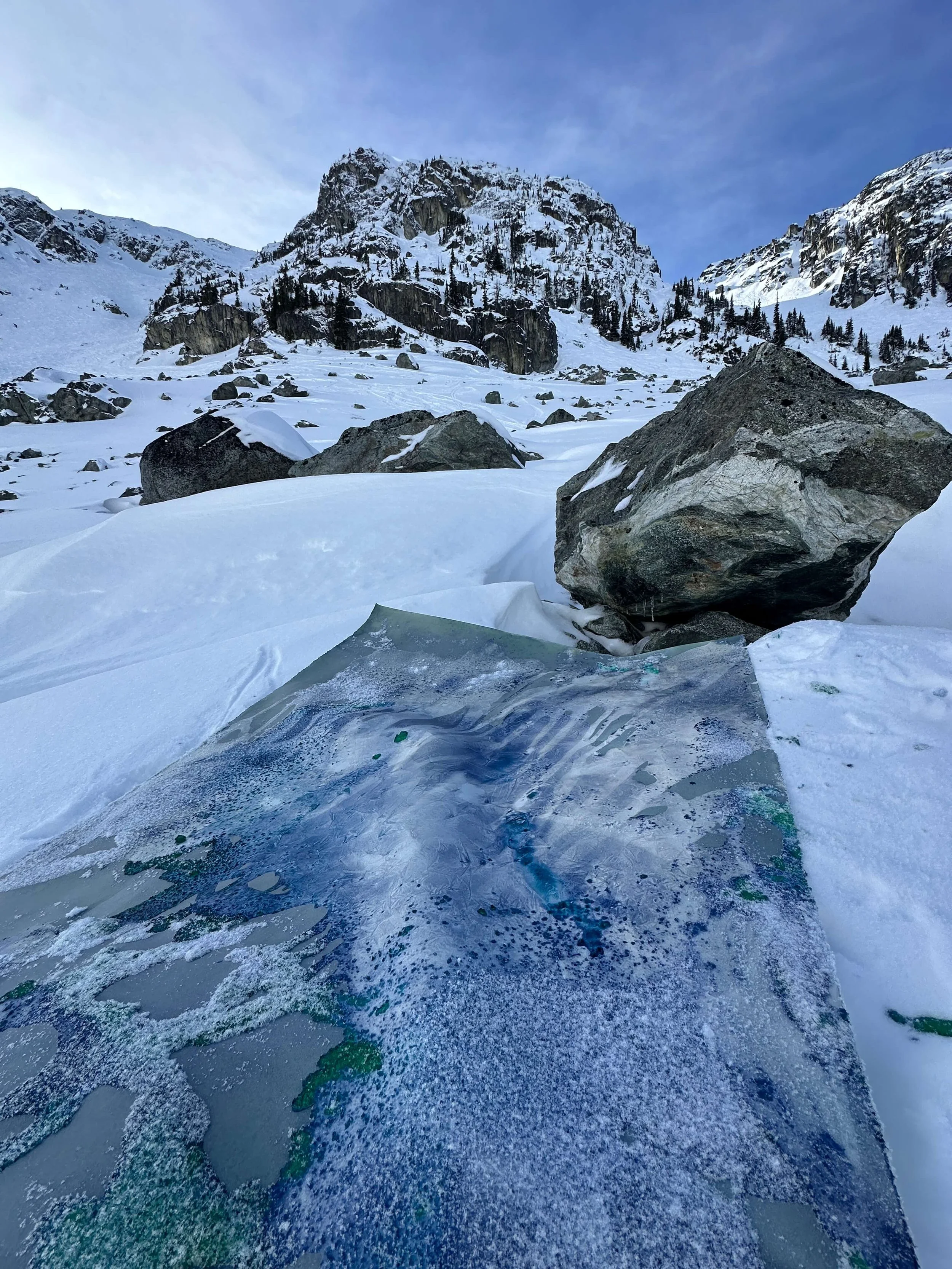
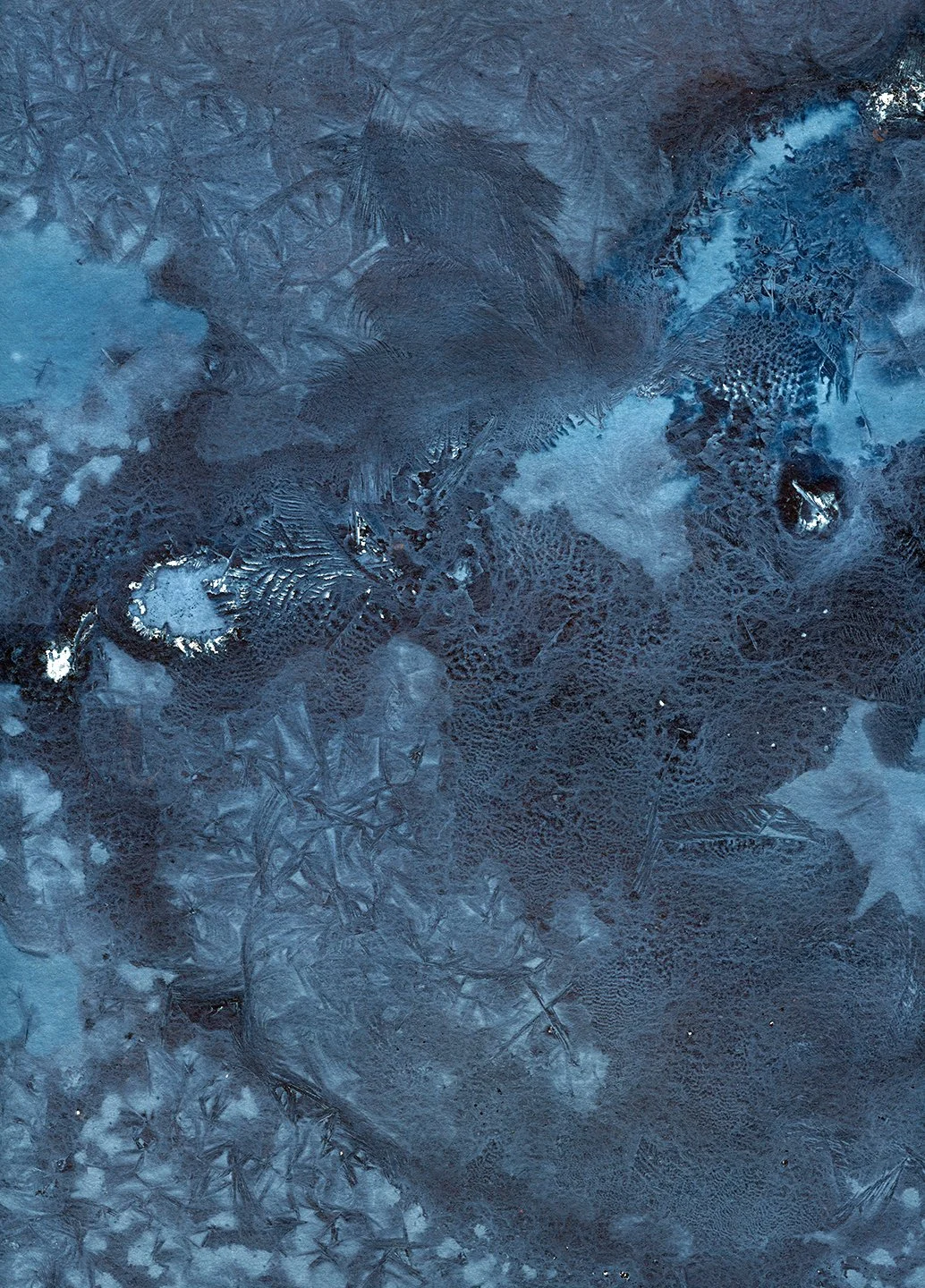
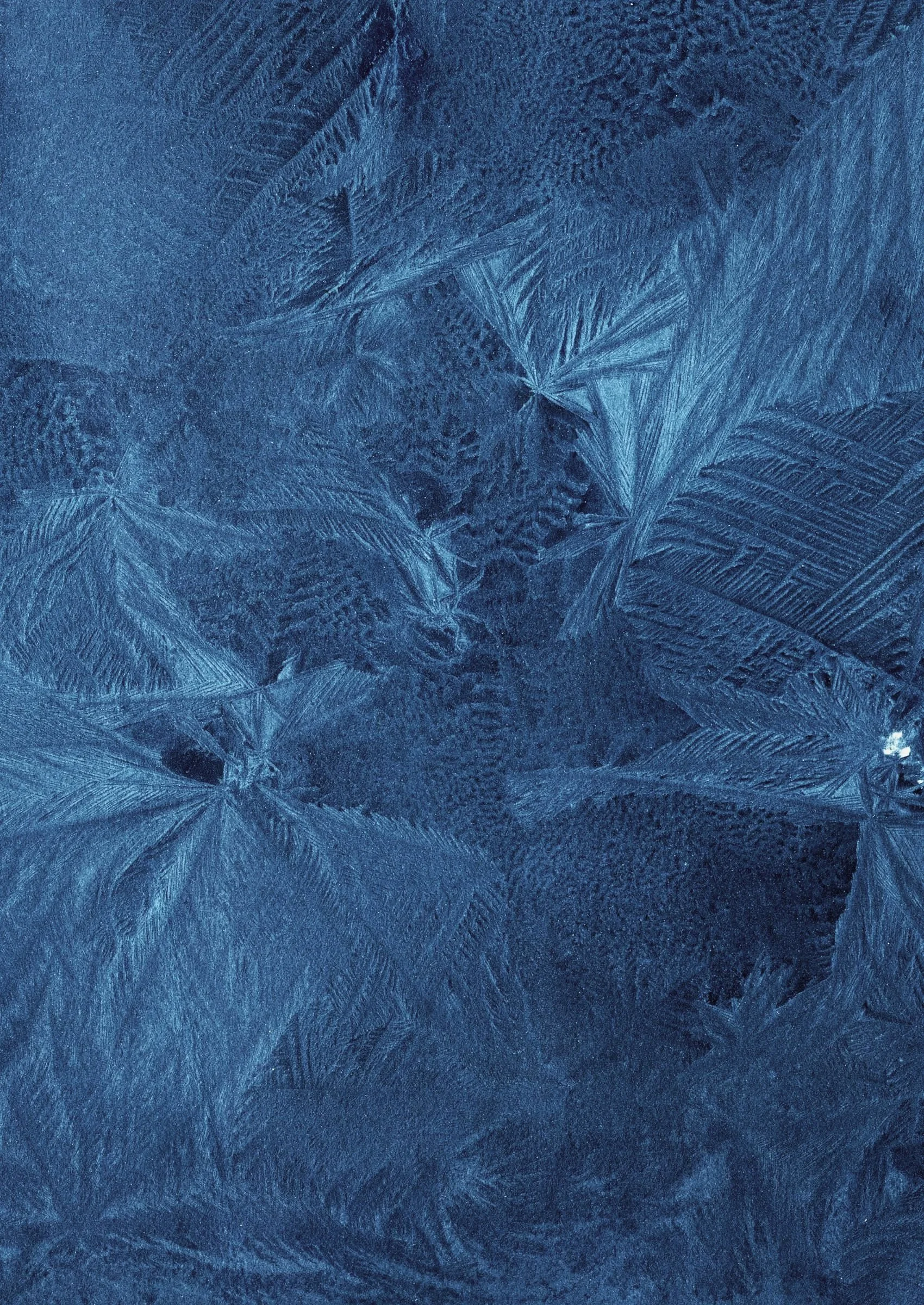
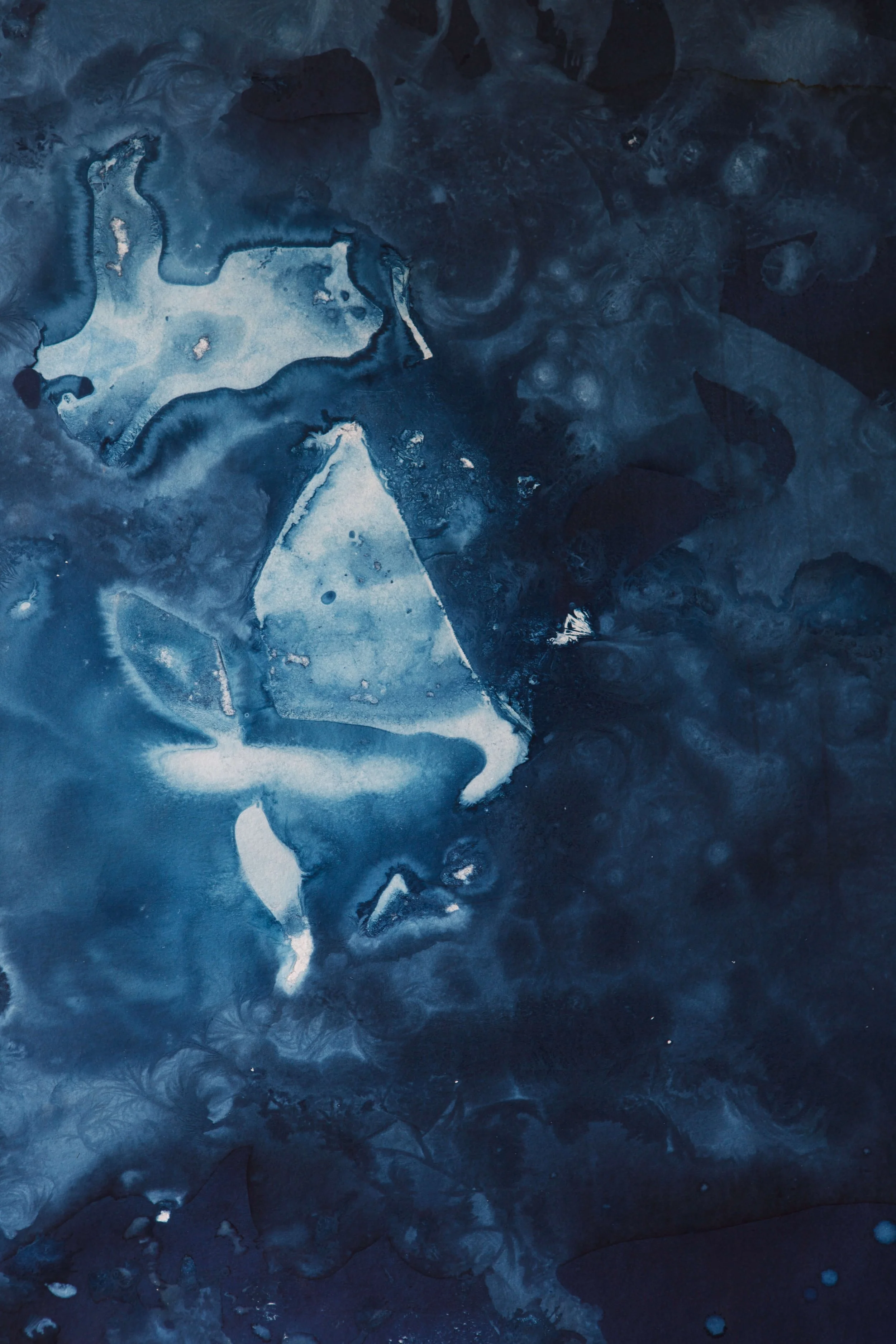
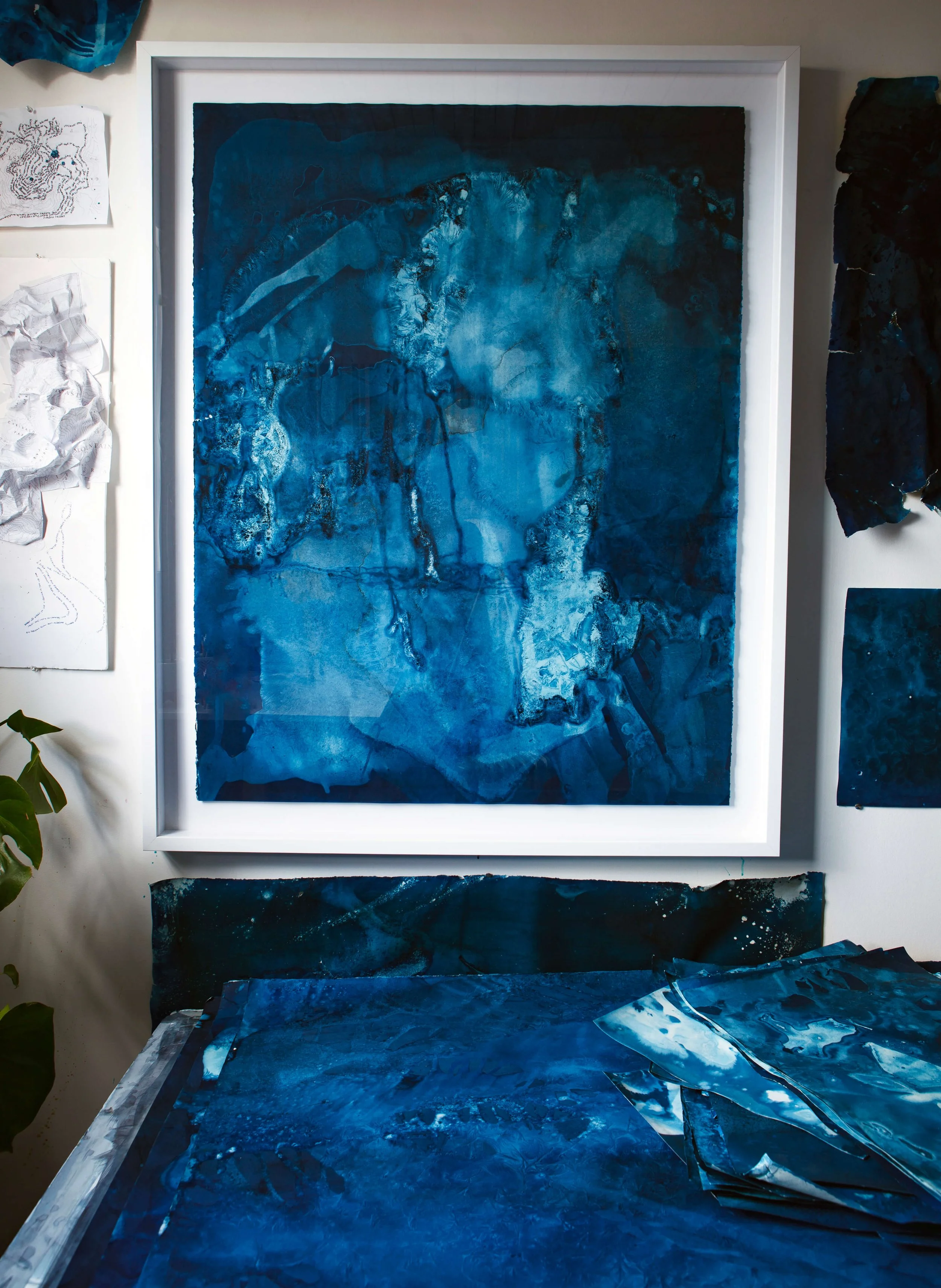
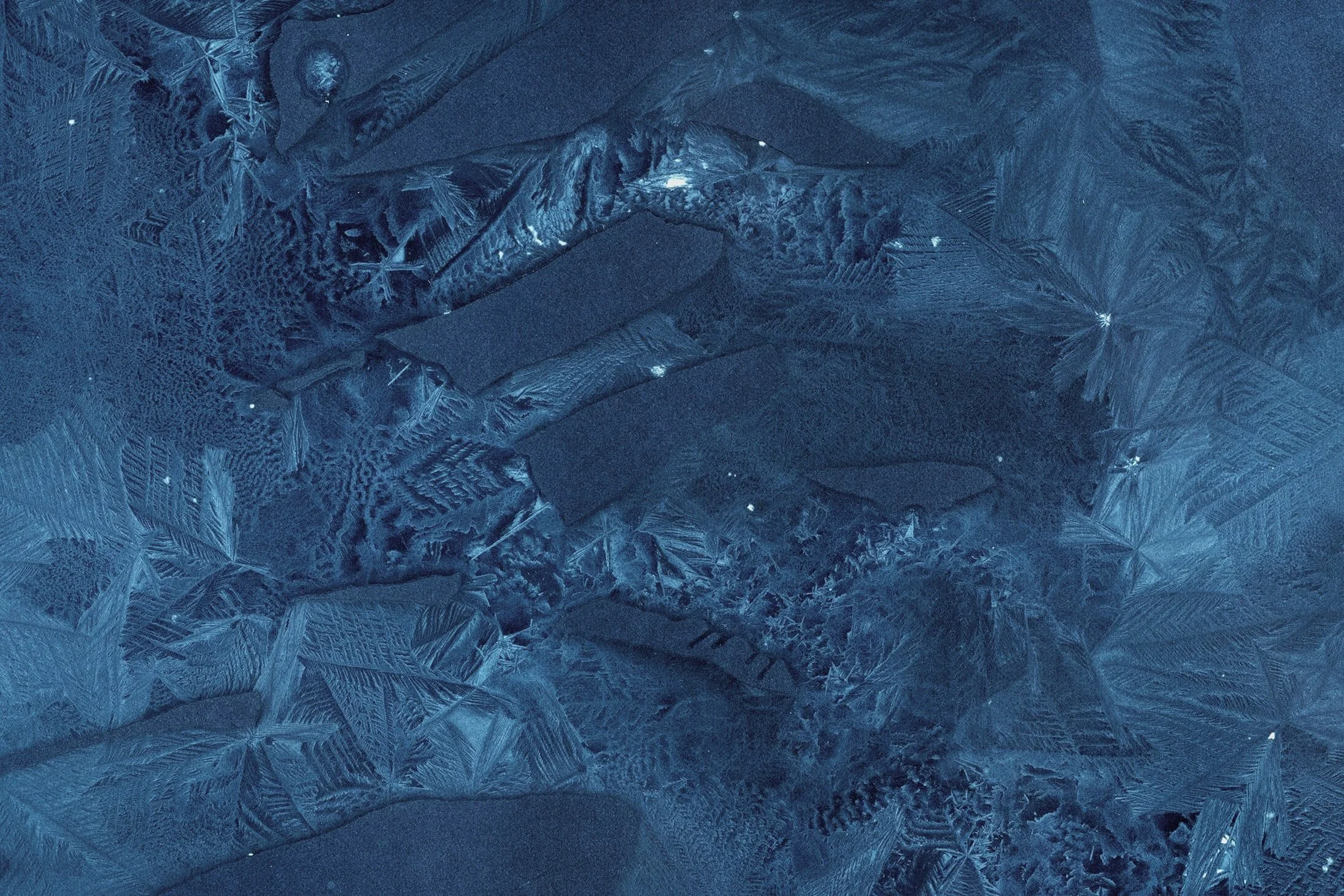
These large-scale cyanotypes record ice in the midst of natural phase transition. Created in situ on glaciers and in frozen landscapes, the works are formed not by depicting ice, but through its direct physical interaction with light-sensitive paper.
Working with the historic cyanotype process, these works amplify transformation, revealing intricate structures formed as ice moves between molecular states.
By allowing environmental conditions to shape the outcome, the work foregrounds material agency and positions photography as a site of encounter between climate, chemistry, and time.
These works are themselves being record of geological moments and draw attention to the fragile, dynamic systems that govern ice and water in a warming world.